

About me
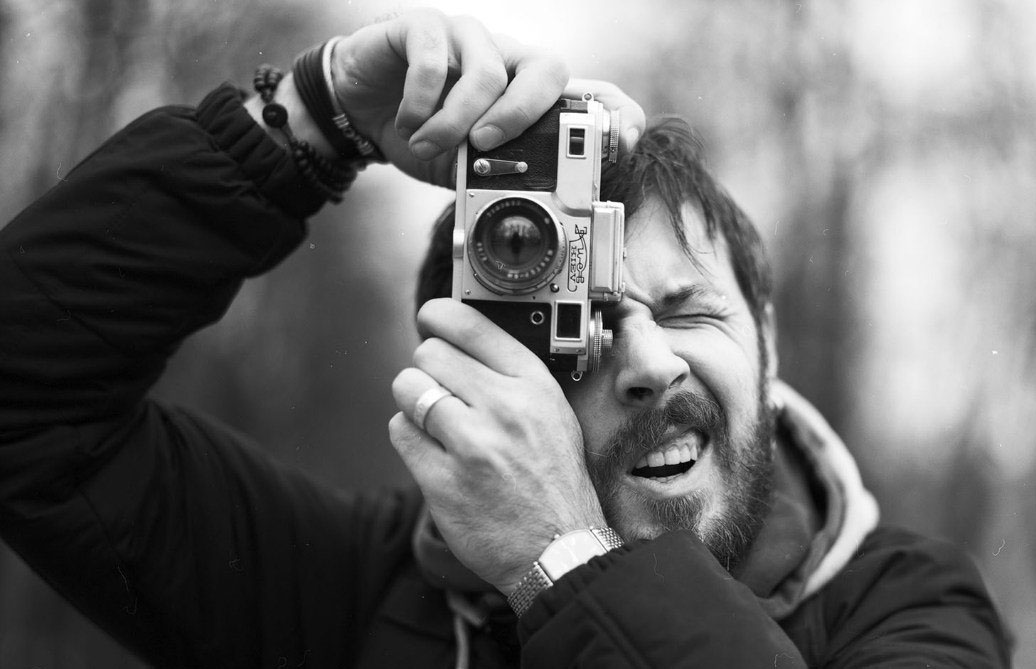
Iwas born in 1976. And like any normal Soviet child, I had access to all useful sciences and materials. Including photography. My first acquaintance with a camera was with my grandfather's FED-3. True, it was not so much a technic acquaintance as a visual and tactile one. The device was made of silver steel, with precisely adjusted mechanisms and smelled of raw leather. And already at a more conscious age, my parents present me a Smena 8m camera. The device is simple, if not primitive. And then for the first time a dark room, a tank, a developer, a fixer, a photo enlarger and printing. And a little bit later, reprints of shooted posters of rock bands. But this is almost like all Soviet children of that period. Scary to say, film was sold in a supermarket. Always. As was photo paper. As were all the necessary chemistry. And strangely enough, it cost quite inexpensive. But the hobby did not go beyond amateur efforts. When in 2000 I realized that I was coping well with the main job tasks as a system administrator and had too much free time left, the choice of a hobby definitely pushed me towards to photography. I was lucky to find myself in the "Academy of Photography". And doubly lucky to find myself in the group of a wonderful teacher and person - Gennady Grikov. That's where it all started spinning. I did not plan to become a professional and make money with photography. But I got so carried away that the hobby began to hit the budget hard.
And I had to take up commercial photography. Yes. I shot weddings. And celebrations. And events. And a lot of other things. Some results in the gallery. But it did not give me true pleasure. True pleasure was given by the opportunity to develop. And thus I gradually mastered alternative processes. Wet-plate process on glass, with a large format camera. With the smell of ether, acetic acid and the ability to see the result right there, during the development process a few minutes after shooting. Cyanotype. A cheap and easy way of contact printing on any paper or suitable fabric. How many types of watercolor papers have been tried. How much tea has been used to tone the result. Oil printing. The author's technique of Maxim Zheleznyakov. Trials and errors. The pursuit of confectionery gelatin with a pleasant smell and a high bloom number and unique prints from one negative. And, of course, a return to film. To medium format, to panoramic "Horizont" camera, to optical printing, to expired photo papers, to photo circulation. And to endless experiments. True, it turned out that no one except me was interested in the results. However, I did not expect it. But I decided it was time to share. And since 2012, I began teaching at the Academy of Photography. Unfortunately, AP school did not survive the first wave of the pandemic. But the desire to teach remained. Therefore, I still regularly conduct training. But more and more often on an individual basis.
About cameras
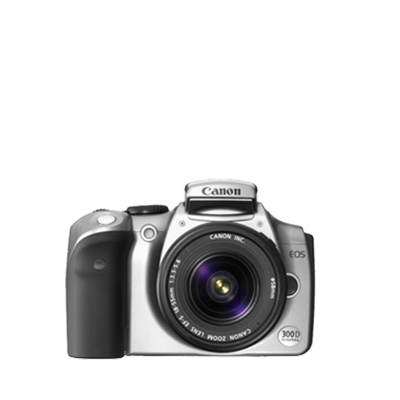
Canon EOS 300D
Digital, APS-C (22.7 x 15.1 mm)Revolution produict. Canon invents an 'advensed amateur' class of cametas with it. And starts digital maddness
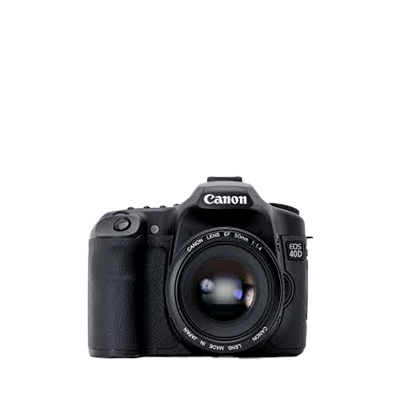
Canon EOS 300D
Digital, APS-C (22.2 x 14.8 mm)Unexpectly Canon makes a georgeous camera. Best digital for that time, as for me. Noise was like the film one.
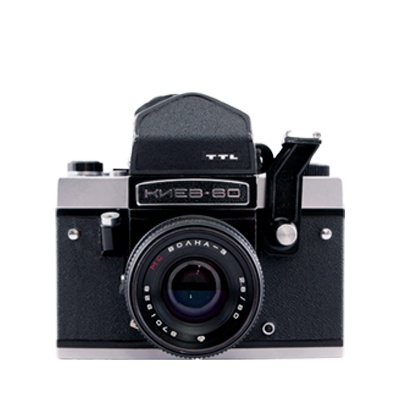
Kiev 60
Film, MF, (6x6 cm)Extremly reliable, bullet proof medium format camera with Pentacon Six bayonet. Square goddes.
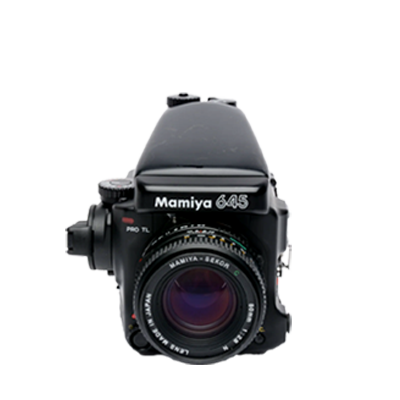
Mamiya 645 ProTL
Film, MF, (6x4.5 cm)Well made Japan camera.Technologicaly great. I didn't love it. Too sharp, too accurant.
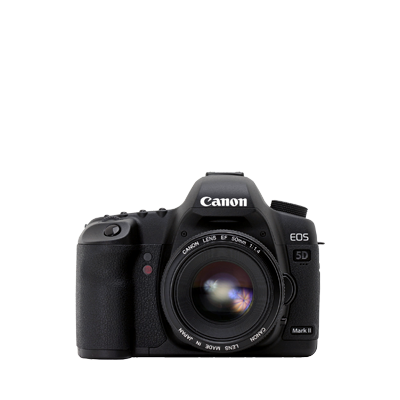
Canon EOS 5D mark II
Digital, FF, (24x36 mm)Digital fullframe camera. Beloved instument. But can't shoot video out of the box. Only with 'Magic Lantern' firmware
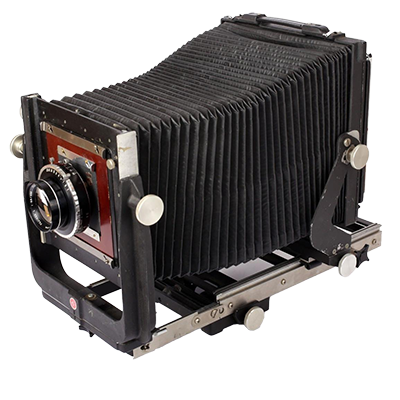
Calumet C1
Film, LF, (full plate 8x10")Large Format Camera. Large in all dimensions. Still dreaming of brass Petzval for her. Still working with Meopta lens
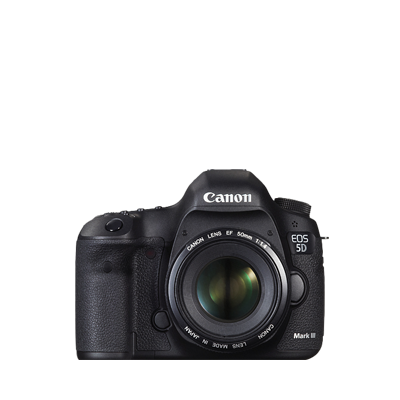
Canon EOS 5D mark III
Digital, FF, (24x36 mm)Georgous digital full-frame instrument. Can do evarything. Didn't want to change it, but time as come to change it
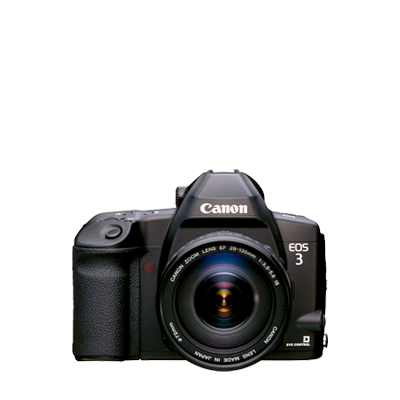
Canon EOS 3
Film, 35mm, (24x36 mm)Unprecedented, almost professional report 35 mm camera. Eye-control focus. Unusible modern time.
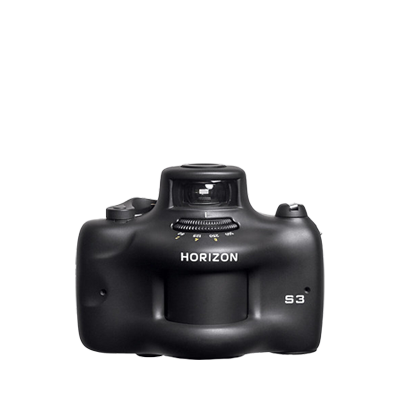
Horizont S3
Film, 35mm, (24x58 mm)Unique panoramic wide-view (120°) camera with rotatable lens. My incurable love for all time in fourth iteration.
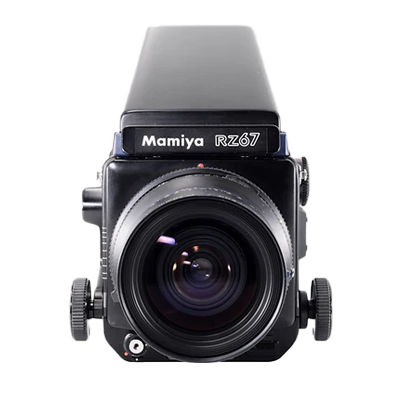
Mamiya RZ67 II
Film, MF, (6x7 cm)Excellent camera & optics, work with camera modules. Untill your left studio. Plainair - pity. Too heave. Too many electronics
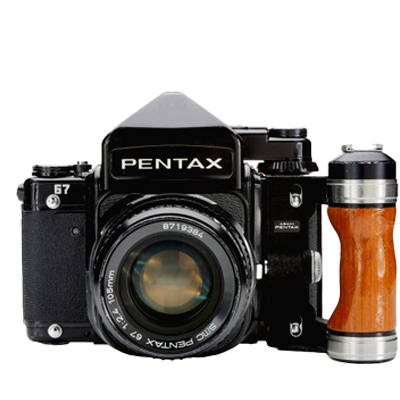
Mamiya RZ67 II
Film, MF, (6x7 cm)Bullet-proof replacement of Mamiya RZ67 II and tech replacement of Kiev 60. Pentax optics - special poem
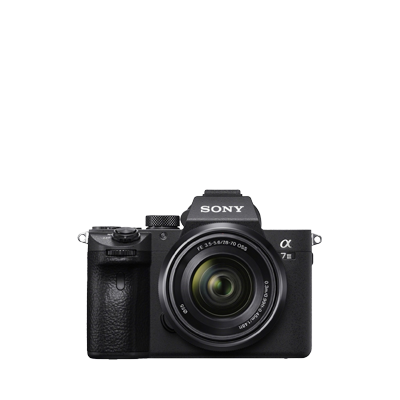
Sony A7 III
Digital, FF, (24x36 mm)High-tech mirrorless cam. Without mirror. Without soul. Without outstanding images. Hate it, but must use.
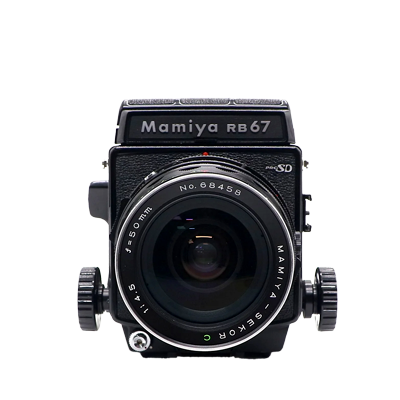
Mamiya RB67 ProSD
Film, MF, (6x7 cm)Less technology, more indestructible then Mamiya RZ67 II. Can do plainairs. Was a present. So I took it.
About digital
My acquaintance with digital cameras happened quite early. I had a chance to work with Sony Digital Mavica FD-81, which recorded photos on a floppy disk. After it there were a bunch of different digital compacts. But somehow, they all flew by. Automatic mode and here is result. Until the Canon EOS 300D appeared. Just for a second, the first digital SLR camera with interchangeable optics and a set of professional adjustments and shooting modes at the price of an amateur camera. Canon invented a new class of photographers. Advanced amateurs. And this camera ended up in my hands. For quite a long time I tried to shoot somehow, just pressing the button. During this time, Canon had already released the 10D, 20D, 30D and even, I think, the first 5D. But I was lucky. I decided to relearn how to take pictures at the moment when the 40D came onto the market. I still think that it is an absolutely amazing camera for its time. I don’t know what the engineers did there, but the image from this sensor gave a head start to its successors 50D and 60D. And it even “made noise” like a film one. However, the time has come to say good bye and switch to a full frame. First 5D mark II, then 5D mark III. Both are amazing working machines. It is simply impossible to say anything negative about any of my five D cameras. Simple, understandable, giving the expected result. Workhorses of their time. Until it was time to part with them. At the time of buying the Sony A7MIII, there were simply no alternatives on the market. This camera surpassed all the players in its technical capabilities. It can do photos. And video. And Wi-Fi. And Bluetooth. Bought it. Played with it. Terrible vacuum cleaner. I mean dust around sticks to sensor. Small. All is too expensive. A bunch of unnecessary settings. Half of the menu is for some unknown reason. And the main drawback. Mirrorless. For some, an undoubted plus. For me, this is another marketing ploy and an attempt by manufacturers to make money for the second time. It pisses me off when autofocus starts to make mistakes after 2-3 hours of operation due to heating. I'm really looking forward to the return of orthodox SLR cameras in small series and in large numbers.
About 35mm
Somehow it didn't work out here. When I got my hands on the EOS 3, I had already managed to play around with all sorts of Zenit’s-FED’s-Kiev’s and etc. And I had time to play around with them. And the film was already biting in price by that time. So, I couldn't fully appreciate all the charms of this camera. 7 frames per second. Seriously? A roll of film in 5.5 seconds! Why do I need eye-control? If every frame is thought out, calculated and expected? Beautiful? Yes! But there is no benefit. And it's a completely different story when you get your hands on the Horizont. A unique panoramic camera with a rotating lens. Yes, there are similar ones. Widelux is the same. But it is more expensive and more capricious. It's all pure mechanics. This is the only small format camera that I truly love and use all the time.
About MF
The first medium format camera I had was the Kyiv 6C. This is, if you like, the forefather of the Kyiv 60. Which was still designed for a thick medium format film raccord and required interframe interval adjustment for modern films. The Kyiv 60 seemed like a pitiful boy compared to this camera. And although the cameras differed visually only in the position of the shutter release button, the sensations were radically different. Yes. Then there was another 6C and three 60s. The square frame drove me crazy. And it was extremely difficult and painful to relearn. Anyone who has tried it - will understand. And the optics! I still remember the drawing of the Volna-3 with warmth. What Helios 40 is there? Plus a set of Carl Zeiss Jena lenses. Where Biometer 80 could simultaneously hide pimples and draw each eyelash at the same time. Kyiv 60 is basically good. But archaic. And I decided to get something more modern. Mamiya 645 ProTL. Modular magnificence. If you want it - with a shaft and nothing else, and here's a bulletproof cube. If you want it - a TTL metering prism, a motor, and here's an automatic SLR. All with contacts, smart. Can do everything. Mirror lock up – here we go. TTL flash – not a problem. Multiple exposure - as easy as pie. And quite compact. Everything is great. But 6x4.5. Not a square. And not even close. And then there's the hangover from Kyiv that hasn't gone away. I tried, but eventually gave in and changed the system to RZ 67II. Everything here seems to be the same, only the camera is bigger and the format is larger. And closer to a square. And everything seems to be fine. But it's scary to take it out into the fresh air. Too many contacts for everything. And as a consequence of all this, Pentax 67. It's not scary to take for a walk. Iron. Almost like Kyiv. No extra contacts. Well, God bless them. And everything is great until one day, then my student present me Mamiya RB 67 ProSD. It's like Mamiya RZ, but only pure mechanics. Now I'm struggling with the choice of which one to take for a walk, Pentax or Mamiya.
About LF
And there's nothing to talk about the large format. Of the full-plate cameras with a format of 8 by 10 inches, my Orbit C1, aka Calumet C1, turned out to be the most optimal. It has all the front and rear standard shifts. The bellows are intact. The rest is up to the optics. The old brass Petzval was difficult to get before. And now it's even more hard to do. But we somehow mastered ambrotype with the old man, and we don't need more.
Get in touch
Feel free to call me, email or contact me at social networks. Or just send me a message from the form bellow
+7 (905) 724-3643 admin@mi-sha.ru instagram Facebook VKontakte